On December 11th, 2025, in Hanoi, the Ministry of Construction held a meeting of the Advisory Council for Evaluation and Acceptance of the results of the Science and Technology Task “Researching solutions to amend regulations on worker skill levels in the current system of norms and construction labor unit prices, aiming to improve the system of cost-estimating norms and market-based methods for determining construction labor prices,” carried out by the Institute of Construction Economics. Le Minh Long, Deputy Director General of the Department of Science, Technology, Environment and Building Materials, and Chairman of the Council, chaired the meeting.
Presenting the task results to the Council, MSc. Pham Huy Cuong, the Task Leader, stated that the current regulations on worker skill levels in the construction norms system are based on the wage scales and payroll tables specified in Decree No. 205/2004/NĐ-CP, which adopt a 7-level worker classification system. However, these regulations are no longer appropriate after the 2012 Labor Code came into effect and do not accurately reflect the current realities of labor utilization and construction organization within construction enterprises.
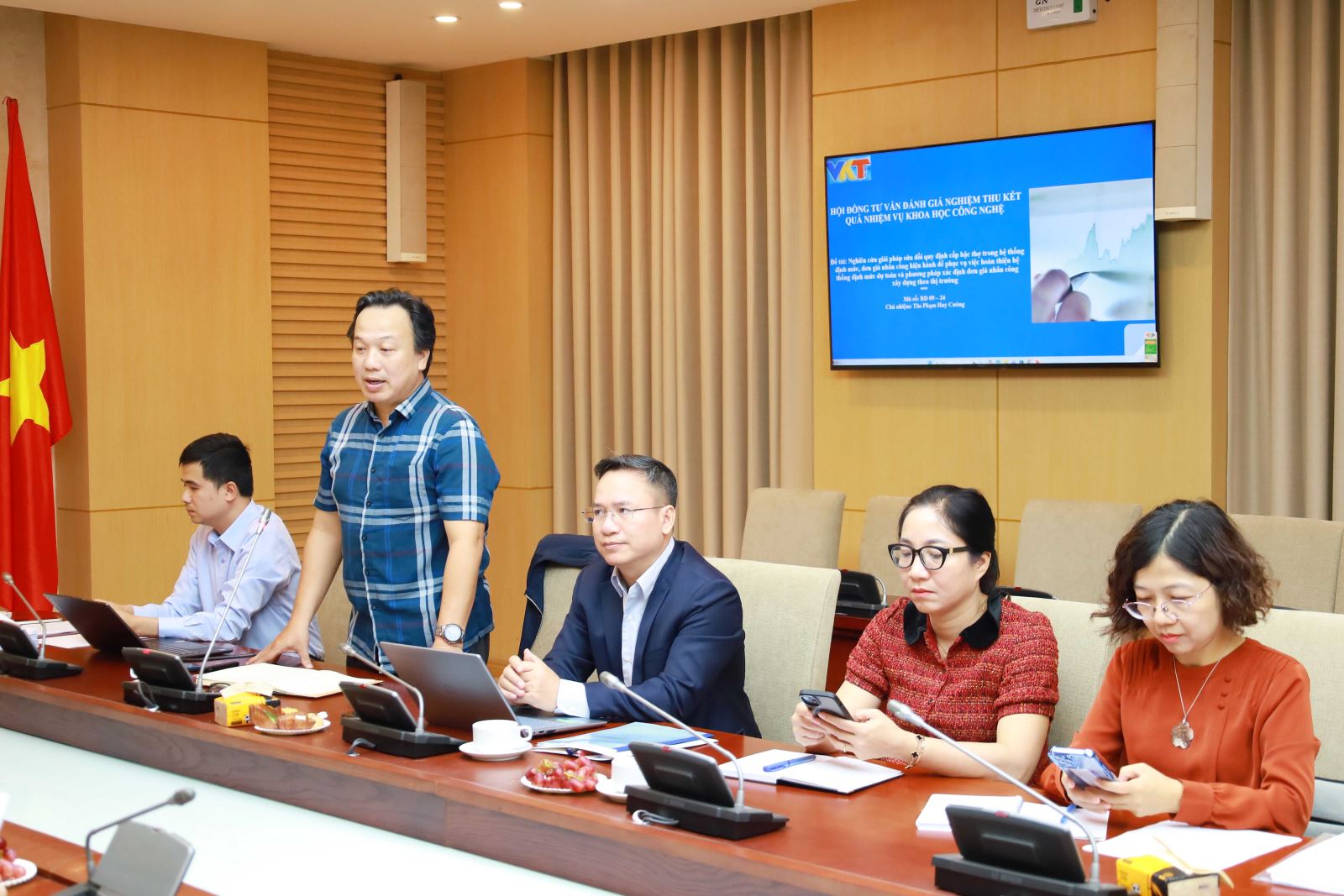
MSc. Pham Huy Cuong, the Task Leader presented the task results.
According to MSc. Pham Huy Cuong, the average worker-skill levels used in the current construction norms have led to inaccuracies in labor consumption for different groups of tasks. In reality, however, the labor market mainly operates with two principal categories of workers - primary and auxiliary labor which are tied to actual skill levels and labor productivity. Therefore, researching solutions to amend the worker-classification regulations within the existing system of norms and labor unit prices so as to improve the system of cost-estimating norms and the method for determining construction labor unit prices based on market conditions is highly necessary and urgent.
To carry out the Task, the research team compiled theoretical foundations and reviewed the system of construction norms and labor unit prices over different periods; analyzed national occupational skill standards and the current state of vocational training in the construction sector; and surveyed the actual use of labor, wage payment practices, and the application of norms and labor unit prices across various localities.
At the same time, the team consulted international experiences from countries with well-developed norms systems, such as Japan and China, which reveal a trend toward simplifying worker classification and categorizing labor either by task groups or based on actual skill levels.
On that basis, the research team proposed several options for revising the worker-classification regulations that aligns with market practices and approaches international standards. The preferred option is to organize labor into two primary groups - primary and auxiliary workers combined with classification based on specific categories of construction work. The team also proposed a roadmap and methods for transitioning to the new system to ensure feasibility and compatibility with the existing norms framework.
Upon completion of the Task, the research team recommended that the Ministry of Construction take the lead in coordinating with relevant ministries, sectors, and localities to review and improve the worker-classification regulations in the current construction norms system, based on the proposed options and roadmap outlined in the Task. They also suggested conducting surveys to assess the suitability of construction crew organization in relation to actual construction productivity and norm-based labor consumption, as a foundation for improving the construction norms system. Additionally, they proposed revising and supplementing the regulations and guidelines on methods for determining construction norms and construction labor unit prices as stipulated in Circular No. 13/2021/TT-BXD.
In addition, continue reviewing and completing the Standards for Categories of Construction Technical Workers to ensure a comprehensive list that aligns with the current level of construction production organization in the market, approaching regional and international standards. This will serve as a basis for finalizing the wage scales and payroll tables according to job grades in the construction sector, as well as the system of tools, indicators, and economic-technical norms to support state management by the Ministry of Construction.
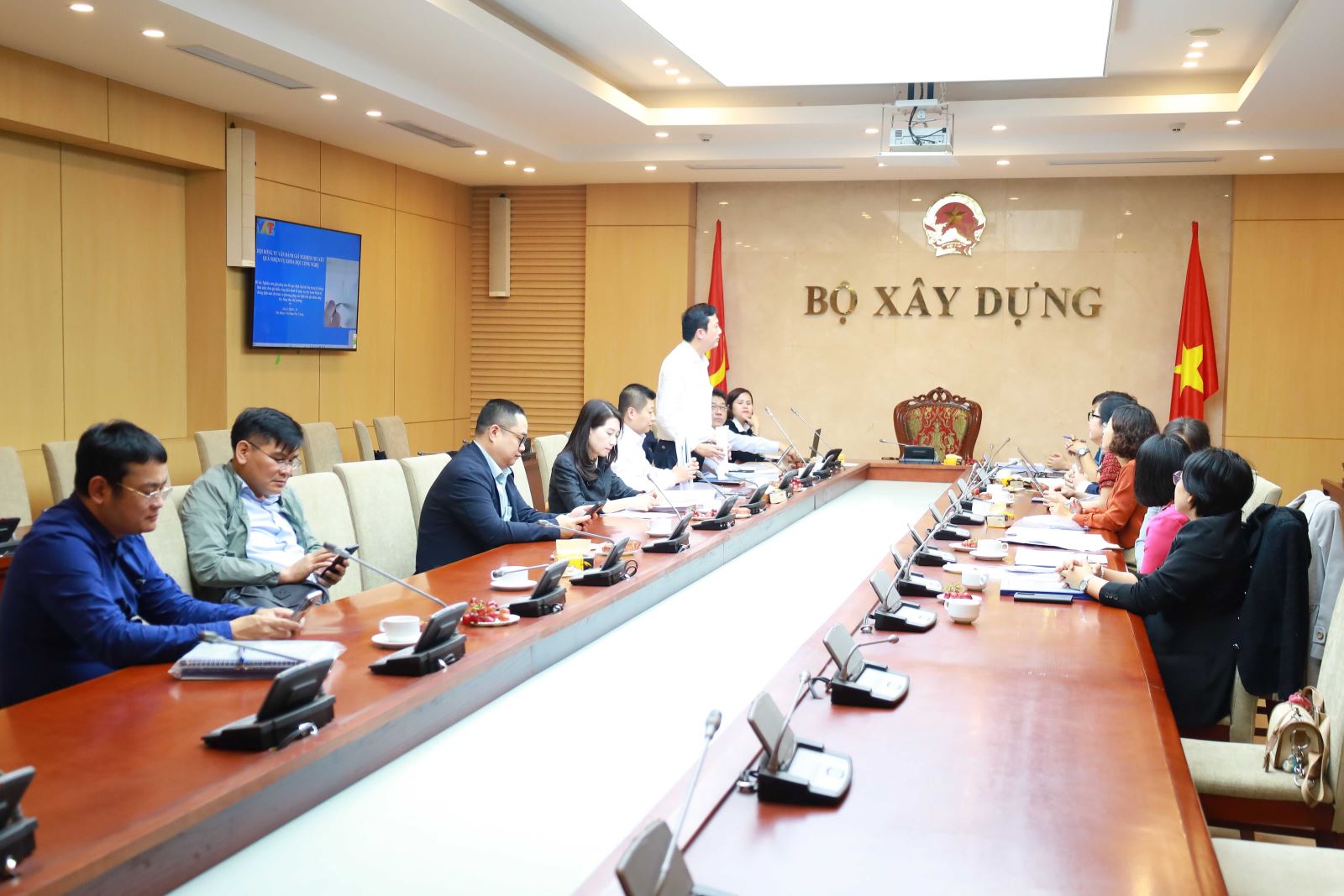
Overview meeting.
At the conference, the experts of the Council highly appreciated the urgency of the Task and recognized that the research team had fully completed all contractual products within the assigned timeframe. The final report closely followed the outline approved by the Ministry of Construction and provided a relatively clear analysis of the worker grading system, labor unit prices, and the relationship between norms–unit prices and the realities of the construction labor market.
In addition, the experts requested that the research team continue reviewing and standardizing the list of reference materials; further clarify the basis for proposing the set of worker classification criteria; supplement the analysis of team organization in construction to enhance the persuasiveness of the proposed solutions; and review and refine the arguments used to determine market-based labor unit prices, ensuring consistency when applied to the current system of norms.
In conclusion of the meeting, the Chairman of the Council, Le Minh Long, acknowledged the efforts and serious working spirit of the research team in carrying out the contractual tasks; at the same time, he evaluated that the research results have high scientific and practical value, contributing to clarifying the shortcomings in the current system of norms and providing an important basis for the Ministry of Construction to consider revising the relevant regulations in the upcoming period.
The Chairman of the Council, Le Minh Long, requested that the research team fully consider the opinions of the Council members and promptly complete the final report and other deliverables of the Task to carry out the next steps in accordance with regulations.
The Council agreed to vote for the acceptance of the Task, with the result rated as Good.