On December 6th, 2025, in Hanoi, the Ministry of Construction held a meeting of the Advisory Council for the evaluation and acceptance of the scientific and technological task titled “Research on assessing the effectiveness of greenhouse gas emission reduction and proposing solutions to respond to the increasing trend of extreme heat caused by climate change in urban green space systems,” carried out by Hanoi University of Civil Engineering. Deputy Director of the Department of Science, Technology, Environment and Construction Materials Nguyen Huu Tien - Chairman of the Council chaired the meeting.
Presenting the task’s results to the Council, Dr. Phạm Anh Tuấn, the Task Leader, noted that Vietnam is among the countries most heavily affected by climate change, particularly by the increasing frequency of extreme heat waves in urban areas. According to international studies, by the end of the 21st century, the likelihood of heatwaves occurring in Vietnamese cities may rise significantly, leading to higher cooling demand and increased greenhouse gas emissions. Meanwhile, in many major cities, the area of urban green space remains low compared with standards and the recommendations of the World Health Organization, and has yet to meet the requirements for improving microclimates and mitigating the impacts of the urban heat island effect.
Based on this reality, the task was implemented to scientifically assess the cooling effectiveness and greenhouse gas reduction potential of urban green space systems particularly urban shade trees along streets and in parks while also proposing suitable design and layout solutions to respond to the increasing trend of extreme heat due to climate change.
The objective of the task is to quantify the cooling effectiveness and greenhouse gas absorption capacity of trees using the methods of the Intergovernmental Panel on Climate Change (IPCC), develop a list of high-performance tree species, and propose orientations for sustainable development of urban green space systems tailored to the climatic conditions of different regions in Vietnam.
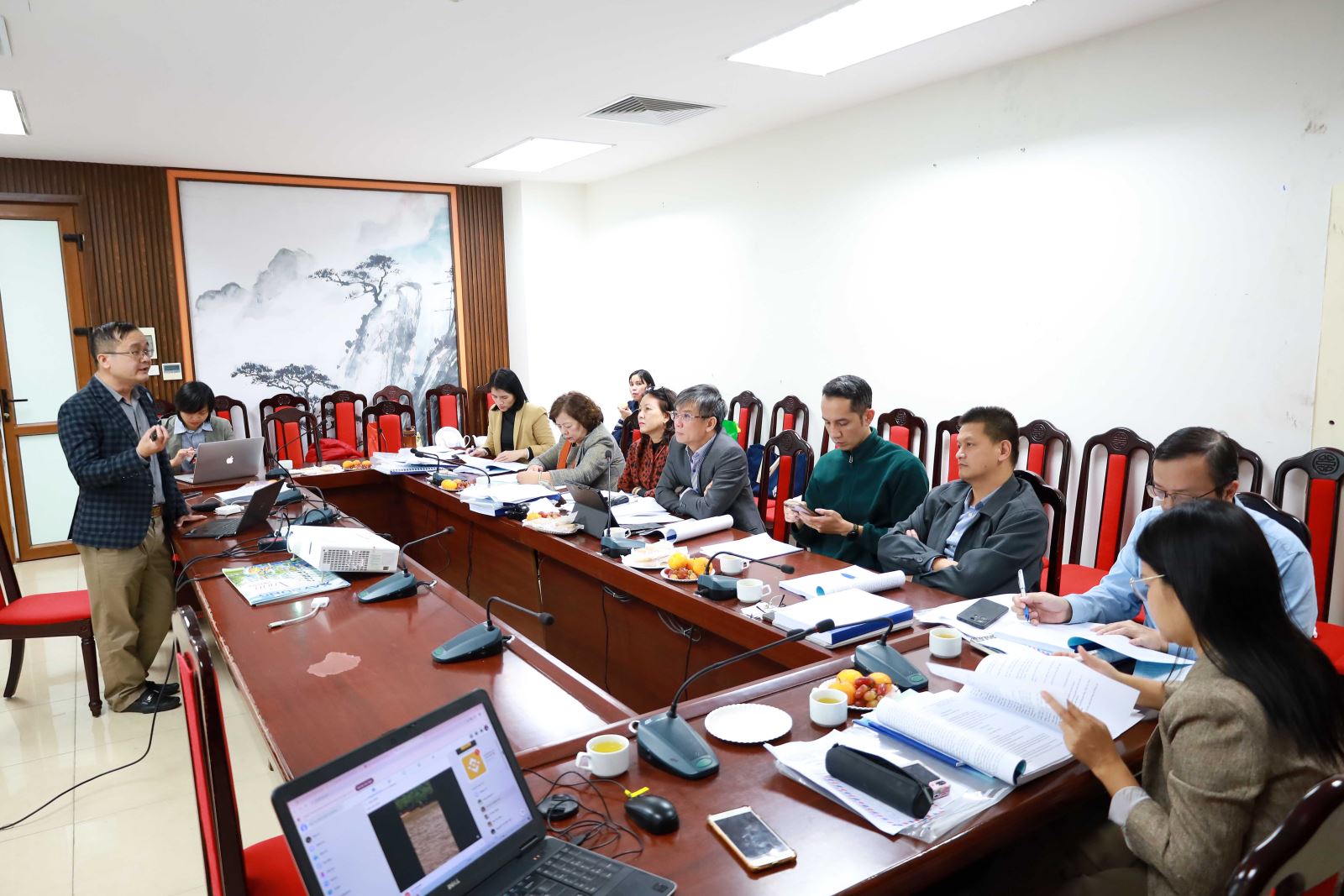
Working scene.
During the implementation process, the research team conducted surveys and assessments of shade trees in the inner urban areas of three cities representing three climatic regions: Hanoi, Ha Tinh, and Ho Chi Minh City. The study subjects included trees planted along various types of urban roadways as well as in typical parks. A comprehensive set of research methods was employed, ranging from literature synthesis, field surveys, 3D volumetric scanning of trees, microclimate monitoring, biomass and emission calculations, to urban microclimate simulation and expert consultation.
Dr. Pham Anh Tuan emphasized that the research findings show the significant role of shade tree systems in reducing ambient temperatures and greenhouse gas emissions in urban areas. The task analyzed and evaluated the cooling and emission-reduction effectiveness of 73 common tree species, thereby developing a list of 46 species with high effectiveness in reducing urban heat and 49 species effective in reducing greenhouse gas emissions. Based on scenarios of tree arrangements for different types of streets, the study demonstrated that increasing planting density and using multi-species compositions provide better microclimate improvement, especially on streets that are more exposed to heat.
At the conclusion of the implementation process, the research team recommended the prompt completion of guiding documents, standards, and technical regulations related to the development of urban green spaces in alignment with the goals of heat reduction and greenhouse gas mitigation. They also encouraged localities to develop community-involved green space programs and projects and socially mobilized resources. The team further proposed expanding research and implementing pilot projects in cities with varying climatic characteristics, aiming to develop regionally distinctive and long-term sustainable urban green space systems.
At the meeting, the Council members assessed that within the assigned time limit, the research team had fully implemented the products, contents, and requirements according to the contract; modern research methods; reliable data; logical report structure and high practical value in supporting the development of urban development policies to adapt to climate change.
In addition to the strengths, the Council also pointed out several aspects that the research team needs to supplement, revise, and improve in the deliverables. Specifically, the team should further clarify the scope of the study and the criteria for selecting representative streets and parks; review and supplement content related to the potential for transferring research results and solutions for mobilizing social resources in the development of urban green spaces.
Concluding the meeting, Council Chairman Nguyễn Hữu Tiến commended the research team’s seriousness and dedication throughout the implementation of the task, noting that the final report and deliverables meet quality requirements.
To further improve the quality of the products under the contract, Chairman of the Council Nguyen Huu Tien requested the research team to fully absorb the comments of the Council members, and at the same time pay attention to issues related to ensuring safety for people and vehicles when arranging trees, reviewing errors in the layout; promptly completing the Summary Report and the products of the Task and implementing the next steps according to regulations.
The Council unanimously voted to accept the results of the task, rating it as “Good.”